If you are asking what is considered North Georgia, you are likely researching relocation options, evaluating real estate markets, or trying to understand regional boundaries within the state. Unlike official county lines or city limits, “North Georgia” is a regional term rather than a formal governmental designation. The definition can vary slightly depending on context, but in general, North Georgia refers to the upper portion of the state above metro Atlanta and includes the foothills of the Appalachian Mountains, the Blue Ridge Mountains, and surrounding counties.
Understanding what is considered North Georgia requires looking at geography, economic regions, cultural identity, and real estate market distinctions. While maps may divide Georgia into north, middle, and south sections, the northern region carries its own identity shaped by terrain, climate, and development patterns.

What Is Considered North Georgia Geographically?
Geographically, North Georgia typically includes all counties located above the Atlanta metropolitan area. This region stretches from the northern suburbs of Atlanta to the Tennessee and North Carolina borders. It encompasses mountain terrain, national forest land, and elevated elevations compared to central and southern Georgia. Counties such as Fannin, Union, Lumpkin, White, Gilmer, Pickens, Dawson, Rabun, Towns, and Habersham are almost always included when defining what is considered North Georgia.
The region is characterized by rolling hills, mountain ridgelines, rivers, and lakes. The Chattahoochee National Forest occupies a significant portion of this territory, contributing to the area’s rural and scenic character. Elevation changes in this region also influence weather patterns, with slightly cooler temperatures compared to lower parts of the state.
Is Metro Atlanta Part of North Georgia?
A common question that arises when discussing what is considered North Georgia is whether metro Atlanta qualifies as part of the region. Technically, Atlanta sits in the northern half of the state, but culturally and economically, many people distinguish metro Atlanta from the mountain and rural counties farther north. Some definitions include northern suburban counties such as Forsyth, Cherokee, and North Fulton as part of North Georgia, especially when discussing real estate markets. However, once you move into the core urban areas of Atlanta, the identity often shifts toward “Metro Atlanta” rather than “North Georgia.”
For relocation and real estate purposes, many buyers view North Georgia as beginning roughly north of Interstate 285, extending upward toward the mountain counties.

Mountain Counties and the Blue Ridge Region
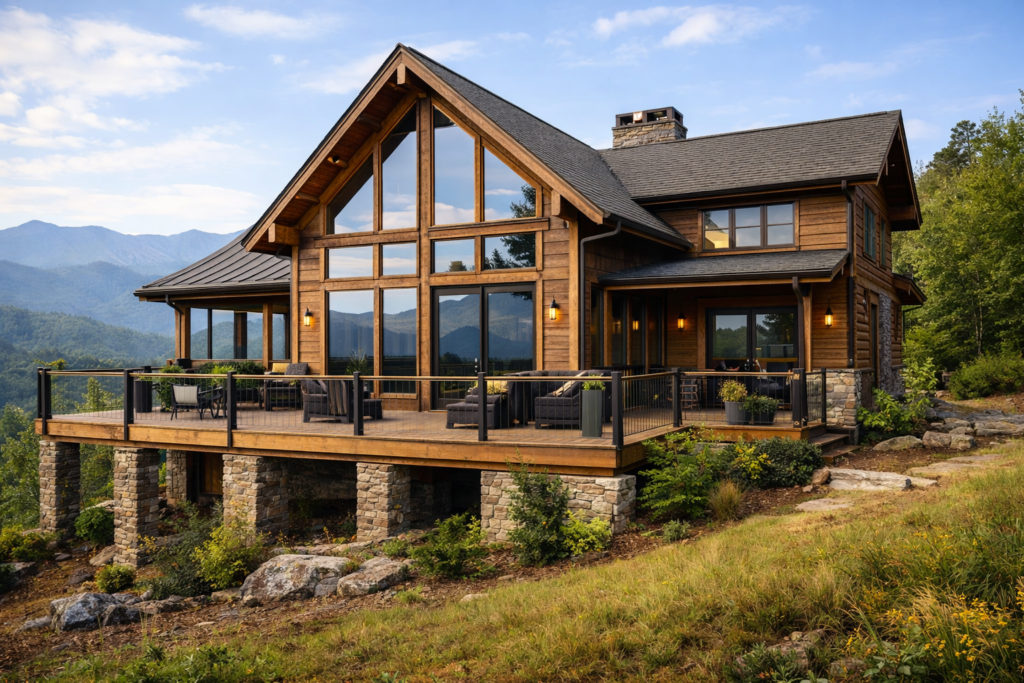
The most widely accepted definition of what is considered North Georgia includes the Blue Ridge Mountain region. Cities such as Blue Ridge, Blairsville, Ellijay, Dahlonega, Clayton, and Hiawassee fall squarely within this category. These communities are known for cabin properties, lakefront homes, vineyards, hiking trails, and outdoor tourism. The terrain becomes more mountainous as you approach the state line, and elevations increase significantly compared to the rest of Georgia.
This region is often associated with vacation homes and second-home markets, particularly around Lake Blue Ridge and other mountain lakes. Real estate pricing in these counties can differ dramatically from central Georgia markets due to limited inventory and high scenic demand.
Economic and Development Differences
Another way to define what is considered North Georgia is through economic patterns. Northern suburban counties such as Forsyth and Cherokee have experienced rapid residential growth driven by proximity to Atlanta employment centers. In contrast, the mountain counties rely more heavily on tourism, seasonal residents, and small-business economies.
Infrastructure density decreases as you move farther north. Urban-style development transitions into rural landscapes, national forest land, and agricultural properties. Buyers relocating from out of state should understand these development patterns before choosing a location.

Climate and Terrain Distinctions
Climate also helps clarify what is considered North Georgia. Higher elevations in the northern region result in slightly cooler summers and occasional winter snowfall, especially in the mountain counties. This contrasts with South Georgia’s warmer, flatter terrain. The landscape shifts from coastal plains and farmland in the southern half of the state to hardwood forests and mountain ridges in the north.
The Appalachian foothills create varied topography that influences construction, road design, and property layouts. Mountain lots may feature sloped driveways, wooded acreage, and scenic overlooks rather than flat suburban subdivisions.
Real Estate Perspective: Why the Definition Matters
From a real estate standpoint, understanding what is considered North Georgia is important because pricing, property types, and buyer expectations vary widely across regions. Lakefront homes in Fannin County operate under different market dynamics than suburban homes in Forsyth County. Mountain cabins attract second-home buyers and investors, while northern suburban communities often serve full-time residents commuting to Atlanta.
If you are researching purchasing options within the region, you may also find it helpful to review our related guide on How to Buy a House in Georgia to better understand the transaction process statewide. Use your WordPress internal link tool to maintain proper structure when referencing related resources.

Government and Regional Planning Classifications
There is no single official state boundary that defines North Georgia. However, certain regional planning commissions group counties together for economic development purposes. The Georgia Department of Community Affairs and other state agencies often categorize counties into northern districts for administrative reasons. A helpful non-competing resource for reviewing official county maps and regional divisions is the State of Georgia’s official website, which provides access to geographic and administrative information.
These administrative groupings may differ slightly from cultural or real estate interpretations, but they generally align with counties north of metro Atlanta.
Cultural Identity of North Georgia
Beyond geography, what is considered North Georgia also includes cultural distinctions. The region is associated with Appalachian heritage, mountain festivals, local agriculture, and outdoor recreation. Town squares, historic courthouses, and seasonal events contribute to a distinct identity compared to urban Atlanta or coastal Savannah. Lifestyle preferences often drive relocation decisions as much as geography.
Buyers seeking mountain living, lakefront properties, or rural acreage typically focus on the northernmost counties. Meanwhile, those seeking suburban amenities while remaining north of Atlanta may look at transitional counties that bridge metro and mountain regions.
Conclusion
So what is considered North Georgia? Generally, it includes all counties north of metro Atlanta, extending to the Tennessee and North Carolina borders. The region encompasses the Blue Ridge Mountains, Appalachian foothills, national forest land, and growing northern suburban counties. While definitions can vary slightly depending on context, the core identity centers around mountain terrain, cooler climate, and distinct development patterns compared to central and southern Georgia. For relocation and real estate decisions, understanding these regional boundaries helps ensure you target the right communities for your goals.
If you are considering buying or selling lake property in North Georgia, the team at North Georgia Lake Living specializes exclusively in waterfront real estate. Explore available North Georgia lakefront homes and work with local experts who understand shoreline value, dock rights, and lake-specific pricing. Contact North Georgia Lake Living today to make your next lake move with confidence.
